Magic Mike: The Queerness of Bromance and the Objectification of Women.
Magic Mike is a very lighthearted and engaging film film to watch, but scratching past the surface, it is fascinating to see straight men be sexualized and objectified for once, especially in contrast to the countless films in which female characters’ development revolves solely around their bodies as objects. Although it is refreshing to see a different take on male sexuality, the film continues to frame relationships through a heteronormative lens. Looking past the muscles and the thongs, the film explores a special relationship between the boys, that includes a lot of queer undertones with the bromance that develops between them.
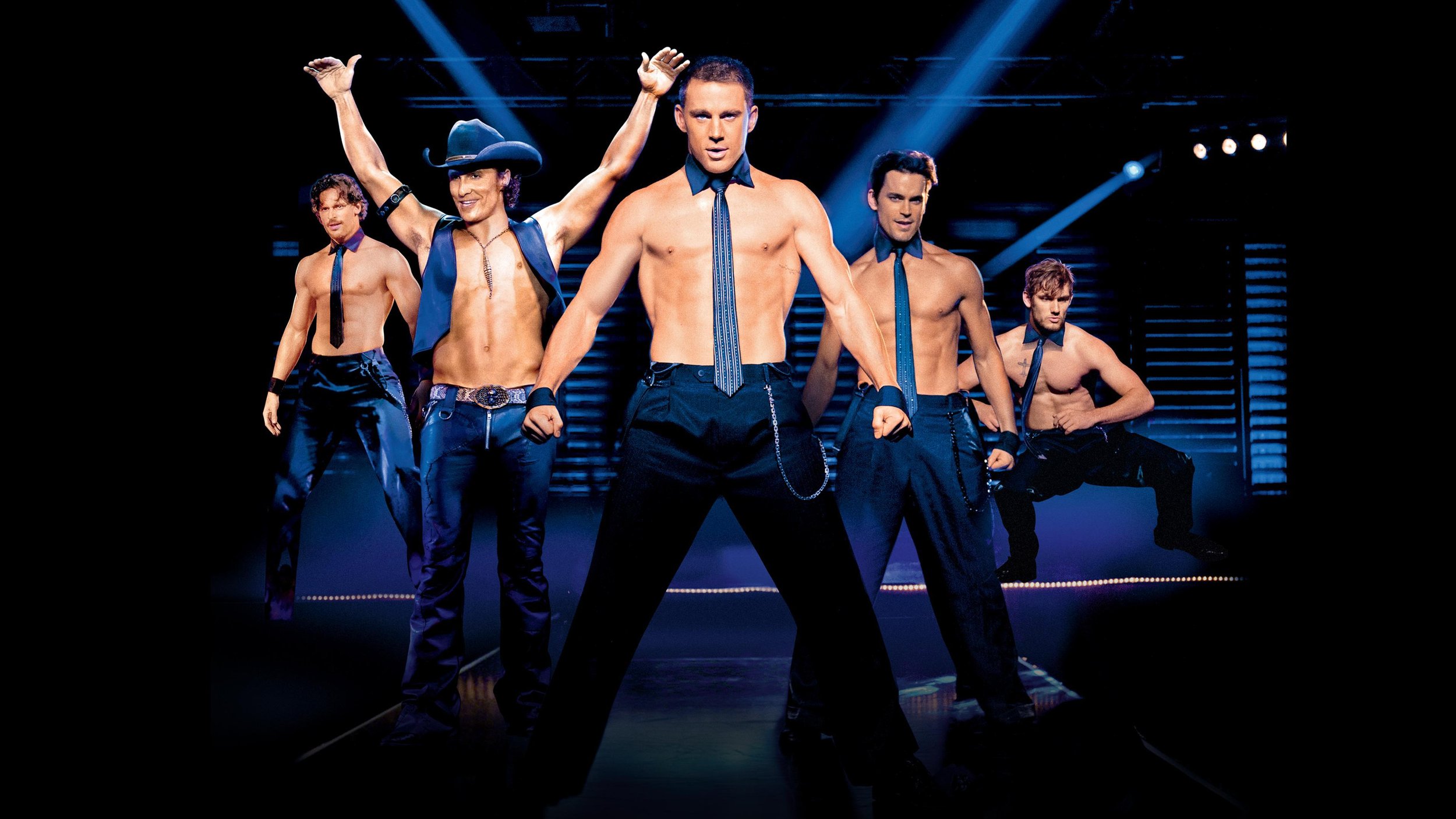
According to DeAngelis’ a bromance is defined as “an emotionally intense bond between presumably straight males who demonstrate an openness to intimacy that they neither regard, knowledge, avow, nor express sexually […] bromance involves something that must happen (the demonstration of intimacy itself) on the condition that other things not happen (the avowal or expression of sexual desire between straight males)” (DeAngelis, 1). This concept serves as a framework to understanding how the film negotiates boundaries of male intimacy, humor and queer subtext. The scene that immediately came to mind after I read this definition is the one where Mike introduces Adam to all the strippers (17:33-19:40). In this scene Adam is told to moisturize and massage Tarzan’s leg, as part of his “initiation” into the group. This moment of intimacy between the two is designed to create a comedic atmosphere, and this scene establishes the playful dynamic that exists between the boys. Similar instances of comedic queer moments are scattered throughout the film. For example, Big Dick Richie is briefly seen in the blurry foreground pumping his penis in front of the rest of the group, or when many times they rip off their pants to expose they are wearing thongs. Maybe having to see so much of each other brings them to a closer friendship. Through the playful take on the bromance, the film creates subtle queerness moderated by comedy. By framing these interactions as jokes, the characters can get away with moments that may seem a little fruity. They are able to explore queer themes, while simultaneously reassuring the audience that they are straight. The expression of bromance is making queerness a “safe” topic for straight audiences.
Another scene I can think of in which the bromance is explored is the almost sex scene at the party (1:08:33-1:10:28). In this moment, Adam and the girl who had been bottle-feeding her pet pig walk into a room to have sex, however their original plan seems to be interrupted when they find Ken and his wife already in bed, and they end up joining them. This scene does a good job at blurring the line between friendship and sexuality. What stands out in this scene is Adam’s interaction with Ken and his wife. Adam is caught staring at Ken’s wife’s breasts, prompting Ken to encourage him to “check them out” because “she loves it”. The wife further encourages him and assures him that “they’re real, I Swear”. So far this seems pretty straight, until Adam and Ken repeatedly tell each other “I love you” back and forth as Adam is groping Ken’s wife. Applying DeAngelis’ theory, the “something that must happen” in this scene is the verbal expression of love between Adam and Ken, and the “other things that do not happen” include any sexual interactions between the two men. The explicitly heterosexual acts and the presence of women in this scene is crucial to its framing as their presence acts as a heteronormative buffer, allowing the bromantic dynamic to flourish, but making sure that whatever is happening between Adam and Ken in this moment remains straight. However, the reliance on women to validate the men’s actions can reveal the limitation of the bromance trope. The bromance may allow space for men to express affection and vulnerability, but in this case it is still reinforcing the male gaze and traditional gender dynamics. For instance, in this scene Ken’s wife is reduced to a mere object to be touched. She is not given a name, no dialogue outside of encouraging Adam to touch her, and her body becomes a facilitator of the men’s bonding. This depiction made me think of Berger’s Ways of Seeing. On page 52, Berger is describing a portrait of a naked woman, which feels reminiscent of this moment. “This nakedness is not, however, an expression of her own feelings; it is a sign of her submission to the owner’s feelings or demands.” (Berger, 52). Similarly to the painting, Ken’s wife is stripped of individuality and agency, solely existing as a vehicle for Adam and Ken’s interactions. Her nakedness serves to maintain the bromance. This makes me think that maybe these men don’t even know what women like. For example the strippers behaviours on stage only reflect their assumptions about female desire, but their actions are not aimed at genuinely pleasing women, but to make money as they exploit these perceptions to profit from their audience. So exploiting one’s wife to honour the bromance does not seem too far fetched to me. There is also an inherent boringness to heterosexuality, which is why adding queer undertones serves to create a comedic atmosphere in this film.
In A Sick And Boring Life, Ward begins her chapter by quoting queer people that all seem to agree that straightness is boring. Since the acceptance of queerness has grown in recent years, what better way to spice things up by adding a little gay seasoning? But we must keep in mind that there is a need to keep things palatable to straight audiences, and some boundaries that should not be crossed in order to stay consumable by the masses. Ward explains that “Straight culture is marked by a willful focus on keeping things light and comfortable” (Ward, 127). A little fruitiness does not hurt anybody, and while the use of queer undertones adds humour, it feels like a missed opportunity to challenge heteronormative frameworks. They are using just enough queerness to be funny, but not enough to deal with real queer issues.
Magic Mike may appear like a groundbreaking film with its willingness to exploring male sexuality and intimacy, but it also reveals the limitations of this framework as it is constrained by heteronormativity and the male gaze. It might appear to flip, or subvert the male gaze by placing men in the role of sexualized objects as strippers, but in reality, it reinforces it as this reversal does very little to challenge the objectification of women, because it still is a topic that happens in the film.
Works CitedBerger, John. Ways of Seeing. Penguin, 1972, pp. 45-64.DeAngelis, Michael. “Introduction.” Reading the Bromance: Homosocial Relationships in Film and Television, Wayne State University Press, 2014, pp. 1-17.Ward, Jane. “A Sick and Boring Life.” The Tragedy of Heterosexuality, New York University Press, 2020, pp. 113-143.