Miranda Priestly and Cruella de Vil: The Embodiments of the Devil in the Fashion World
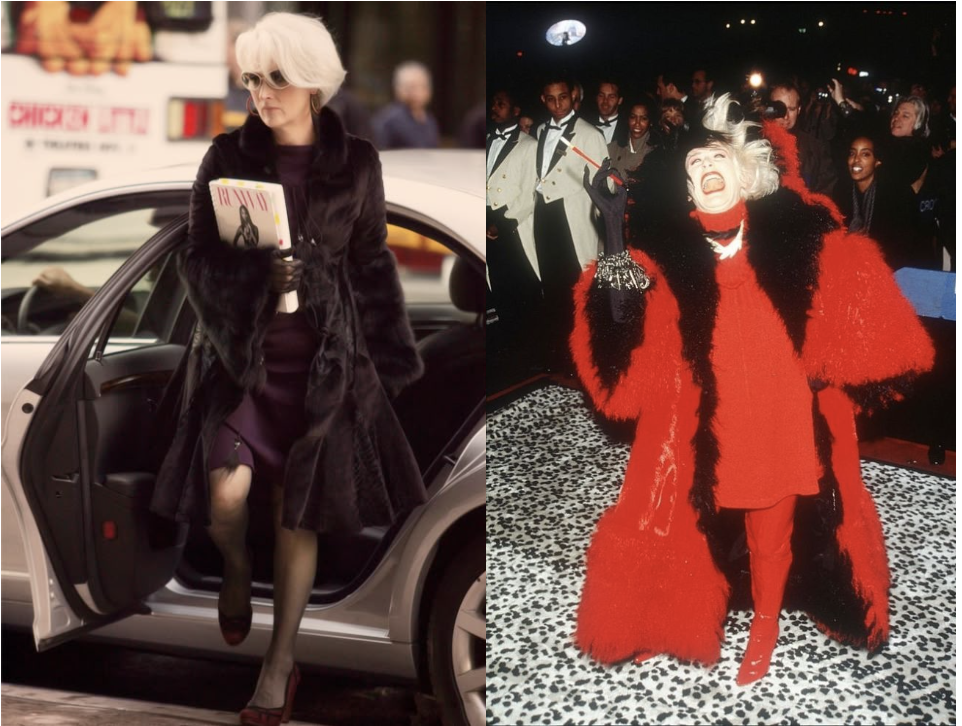
Fig. 1: Miranda Priestly (left), Cruella de Vil (right).
The devil tends to appear in vastly different forms in many of his representations; and whether it’s a snake, a beast, or a fallen angel, the evil remains the same. As our society progresses through time, the devil also evolves. From biblical, to medieval, to modern times, the devil has always been a flexible cultural symbol. When looking at how the devil functions in modern times, a lot can be revealed about our society. The devil in pop culture is represented in many ways, and sometimes his representations may go unnoticed even when they are right in front of us. “No, no. Get away from her. She’s useless and unattractive…” (The Devil Wears Prada deleted scene), a blunt line from Miranda Priestly said so casually that makes it clear that evil does not always look dramatic or obvious, but can come out in everyday moments similar to this one. Miranda Priestly from The Devil Wears Prada (2006) and Cruella de Vil from 101 Dalmatians (1996) (Fig. 1) not only embody devil-like features through their characteristics and costuming, but are also quite literally referred to as the devil. By presenting two powerful women as devil figures, the traditional form of the devil is queered, and now becomes abstract. It is commonly said that evil does not die; it simply reinvents itself, and these two characters are great examples. They both represent the embodiment of evil reinventing itself. This essay will present a comparative analysis of both characters, and reveal how the devil functions and takes form in The Devil Wears Prada and 101 Dalmatians by following Carl Jung’s theory of the internal devil. Additionally, through Teresa de Lauretis’ Technologies of Gender, it will present how the framing of these two characters as the devil may be rooted in misogyny. Through Cruella DeVil and Miranda Priestly, Jung’s theories connect with internal evil, and de Lauretis’ work connects with their socially constructed identity.
In order to properly grasp how Miranda and Cruella are modern day representations of the Devil, his (or in this case her) identity must be deconstructed and broken down to its simplest form. We must ask ourselves what the devil have in common in many of his biblical and popular interpretations? If we look at the Book of Job, the Gospel of Matthew, and Dante’s Inferno for example, the devil presents himself in a different form in each story. Ha Satan (The Book of Job 1:1-2:10.), The Devil (The Gospel of Matthew 4:1-11.), Lucifer (Dante Alighieri, Inferno, in The Divine Comedy 379–383.)… these are all different examples of the same entity yet they all have different forms and different functions. Ha Satan or The Satan in the Book of Job is portrayed as a member of the divine council whose job is to test the faith of humanity, in the Gospel of Matthew he is represented as an opponent to God that tries to test Jesus to misuse his divine power, and in Dante’s Inferno he is represented as a grotesque, three-headed beast who is an immobilized and powerless figure trapped in hell to torture all sinners. In all of these representations, the Devil’s existence contradicts the other. However, it is widely accepted that the devil is a leader, and a figure that is feared by people. In chapter 1 of The Prince of Darkness, Jeffrey Burton Russell explains that there are three types of evil: moral, natural, and metaphysical. Therefore, as the embodiment of evil the devil has the ability to exist in all three of these forms. In The Devil Wears Prada and 101 Dalmatians, the devil takes the place of moral evil through the bodies of Miranda and Cruella. Russell also explains that “people in the modern world assume that the idea of the devil is old-fashioned and therefore false—an objection that assumes that “the modern world” (however defines) has discovered some metaphysical truth (however defined) that makes the existence of the Devil less like now than it ever was […] Therefore the real question is whether the concept of the Devil makes any sense. Did it ever? Does it now? Will it in the future?” (Russell, 2). By that logic, why can the Devil in the modern world not be a fashion designer, or editor in chief of a fashion magazine? There is no reason to believe that Miranda Priestly and Cruella deVil are not just different, more abstract interpretations of the Devil.
In this context, psychologist Carl Jung’s interpretation of the Devil is where this becomes interesting. Jung takes the devil out of hell and puts him directly in the human mind. He explains that the Devil as we know him does not exist in physical form, but rather exists within all of us. The Devil is a part of our being, and a fragment of our imagination. (Mehrtens, 1-4) In his work, Jung suggests that true evil is the shadow that is hidden within us, and the Devil is an interpretation of the “grotesque and sinister side of the unconscious”. (Mehrtens) He also adds that he believes humanity is the root of all evil (Jung, 60), and every thought that humans may have deemed as unacceptable, immoral, or evil are theorized as being our own internal devil. Jung also explains that as humans we have the ability to spot evil in other people but are less likely to be able to spot it in ourselves due to our unconscious biases, and the more that we suppress the evil that exists within us, the more power it will hold over us. But what happens when those unacceptable, immoral, or evil thoughts come to the surface and manifest themselves through our actions? These qualities do present themselves in both Cruella DeVil and Miranda Priestly, and since Jung establishes the Devil not as a spiritual entity but a psychological archetype, it can be argued that when someone taps into the energy of their internal Devil, they are able to begin embodying that Devil and use that to boost the power that they hold.
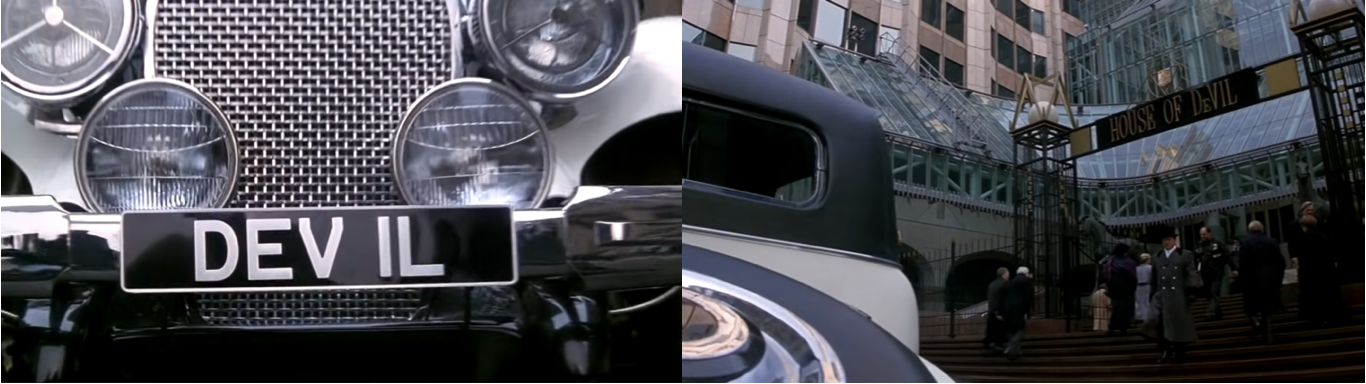
Fig. 2: 101 Dalmatians (1996)
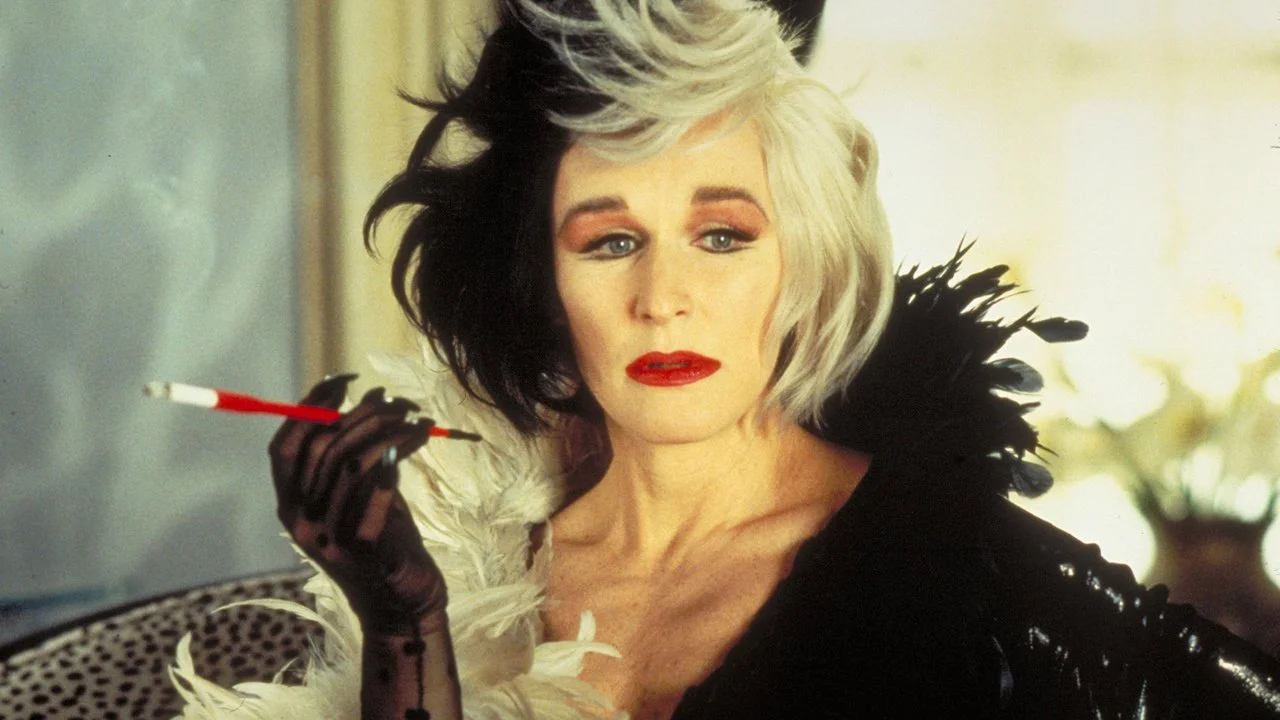
Fig. 3: Cruella de Vil from 101 Dalmatians (1996)
Cruella De Vil, the feminization of cruel devil, an evil fur-loving woman. Cruella’s character is based on her deep admiration for animal fur. The more exotic, unethical, and illegal the fur is, the more it excites her. The thing she is after throughout the film is Dalmatian fur to create a line of coats. When Cruella is first introduced, she is seen stepping out of a car with the license plate “DEV IL”, dropping her off at her place of work, “House of De Vil” (fig. 2). Dramatic music starts to play, and the camera follows behind her as she enters her atelier and her employees scatter in fear. Based on these semiotic elements, the filmmakers are telling the audience that she is the Devil. In her stylistic and aesthetic design when it comes to her hair, makeup, and costumes, she does also evoke a devil-like presence. Firstly her black and white hair creates a split, almost unnatural identity, which is representative of her unexpected mood swings. As a fashion designer, Cruella’s wardrobe is very important in expressing who this character is, and how she is portrayed as the Devil. Her costumes are very theatrical and campy; and are built around luxury and exaggeration. Her silhouettes are dramatic and angular, with strong shoulder pads, a cinched waist and elongated lines seen in her coats and stockings create a weapon-like presence. The presence of animal fur and feathers in her costumes also reveal her ethical values (or lack thereof). Her accessories like her pointy stiletto heels and long red cigarette holder (fig. 3) extend her gestures, making every movement exaggerated and performative. She does not just simply enter a room, she stages every entrance. Cruella keeps a very strict colour palette when it comes to her clothing, and uses high contrast colour blocking with black, white, and red. The black and white pallette she dresses in mirrors her hair which adds to her fractured and unnatural identity. Red is a colour that represents danger and intensity, and is often associated with the devil, and the little pop of red seen in her dresses, gloves, lipstick and cigarette holder (fig. 3) create a sense of contained rage. She frequently dresses in oversized fur coats that swallow her body, making her look aggressive and animalistic. She has an obsession with turning animals into clothing, turning them into a display of violence disguised as glamour. Her personality also embodies sadism and moral corruption. In this film, Cruella has a deep desire to turn Dalmatian puppies into fur coats, which is why she kidnaps 101 of them. She frequently raises her voice which is usually accompanied with an evil laugh, dramatic music and lighting. Cruella is also indulging without limits, this is the greed that is talked about in the bible. In her world, vanity is more important than empathy. Her lack of ethical values mirrors the traditional image of the devil being a torturer for pleasure. Satan is also a great manipulator, like we see in the Book of Job. Cruella dominates every space she enters through intimidation and spectacle. Similarly to the devil in many narratives, she does not use physical force to assert dominance, but her authority and power come from psychological control, and the fact that people fear her.
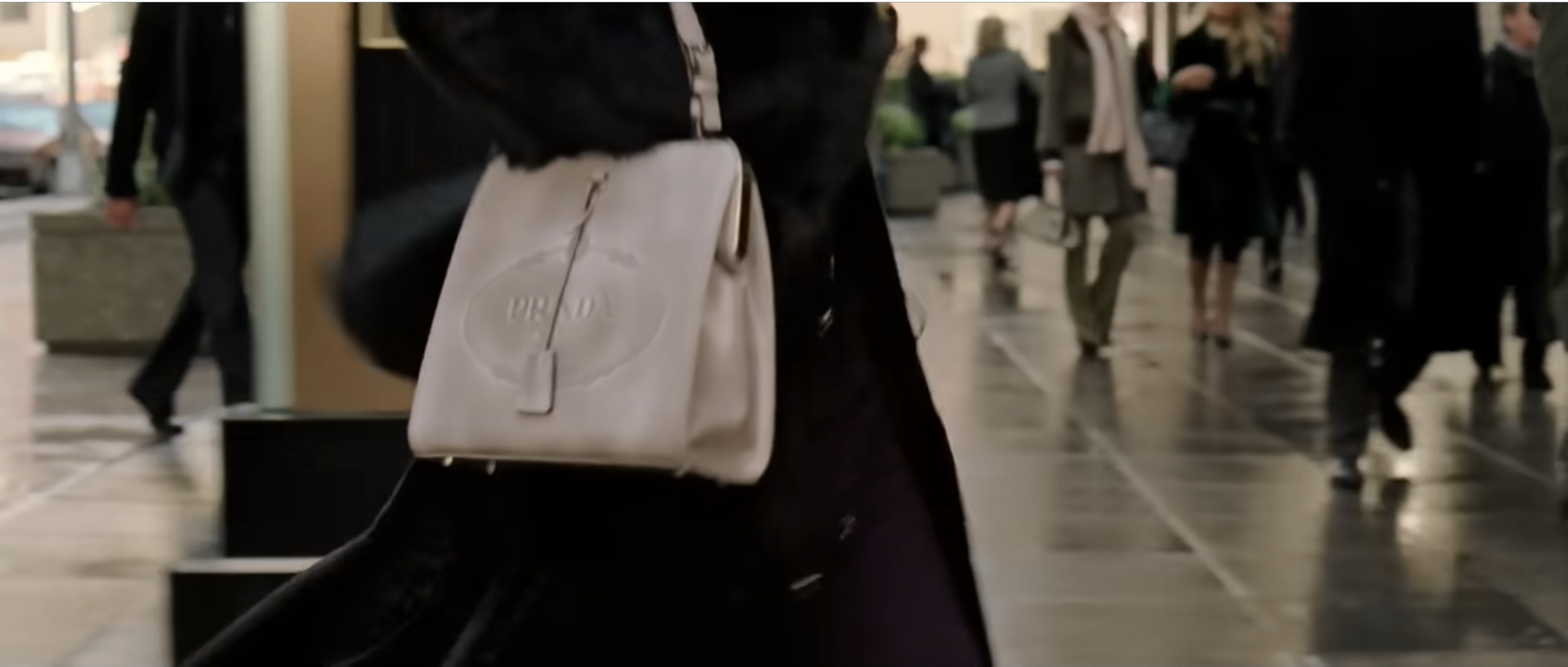
Fig. 4: The Devil Wears Prada (2006)
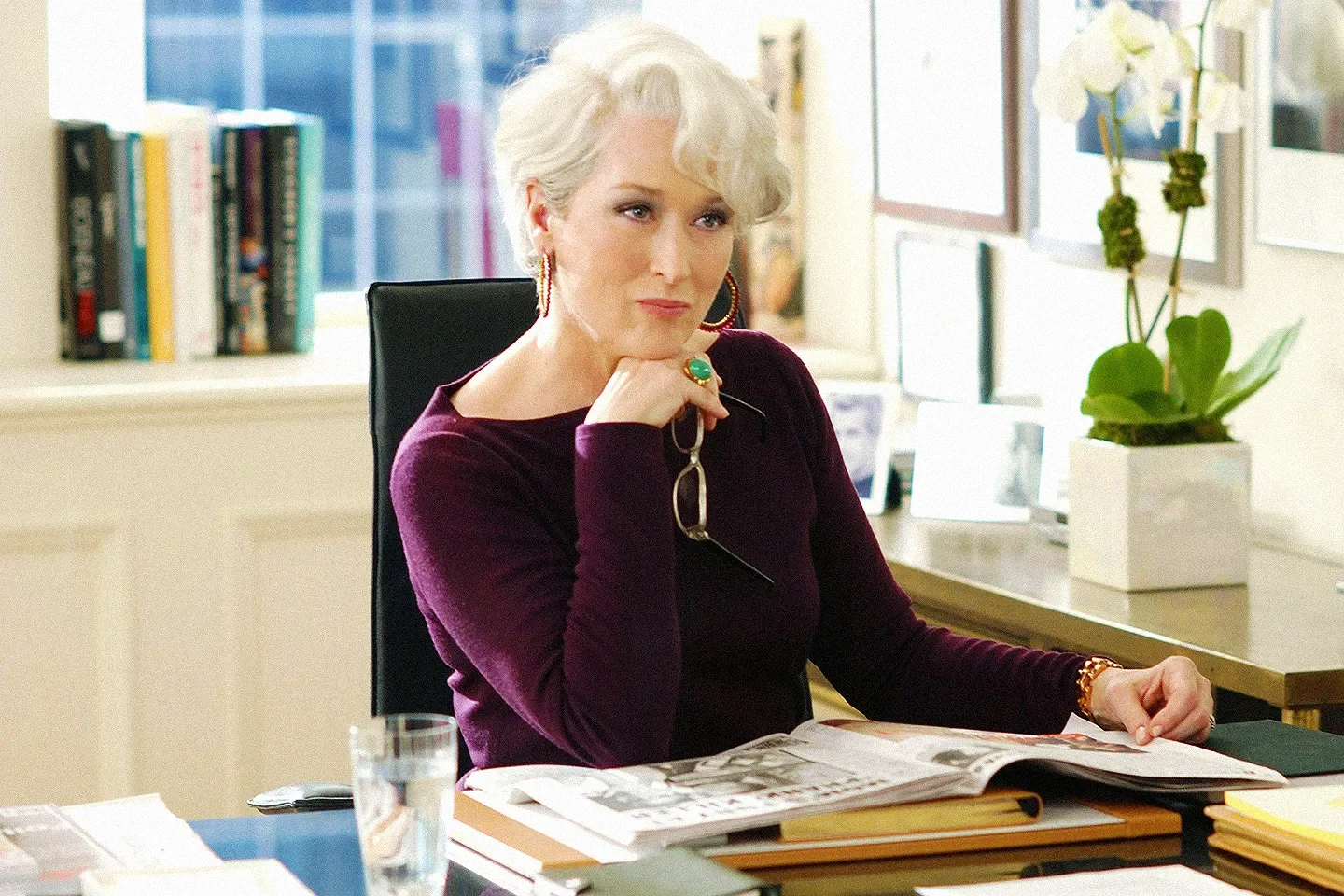
Fig. 5: The Devil Wears Prada (2006)
When it comes to Miranda Priestly, the devil within her is much more subdued. Her name is a giveaway to her character, she is the leader, a priest of the fashion world as if it were a religion. Miranda’s establishing shot is almost the exact same as Cruella’s. She is also seen stepping out of a cab and wearing a fur coat. Dramatic music also starts to play, and the camera follows her from behind as she enters the building, and her employees also scatter in fear. She is carrying a Prada bag (fig. 4), confirming to the audience that she is the Devil that wears Prada. Miranda Priestly is the devil in ways that we don’t expect. Based on Anna Wintour, editor in chief at Vogue and one of the most impactful people in fashion, Miranda Priestly embodies the true nature of an evil boss. However, Miranda’s embodiment of the Devil is quite different than Cruella’s. Miranda’s devilish qualities are rooted in emotional detachment and judgement. She never raises her voice but instead exerts power through her cold stares (Fig. 4), and understated criticism, such as in her dismissive lines like the reoccurring “That’s all”, and “Florals? For spring? Groundbreaking.”, or her infamous monologue in which she scolds her new and slightly unqualified assistant Andrea (Andy) Sachs about her cerulean sweater. In this scene, Andy takes notes and reveals that she is still learning about all that “stuff”, referring to the fashion industry, which offends Miranda and prompts her into explaining that her sense of individuality is an illusion, and every fashion choice she has ever made has been selected for her by the people in that room. This scene is an example of Miranda’s evil manifesting itself as institutional rather than personal. Unlike Cruella’s overt cruelty, Miranda’s authority is legitimized. Her job is to dictate trends and to shape cultural value. She is in control of people’s tastes, and all individual choices are truly just an illusion that is shaped by the people and by the systems that she controls. Miranda does not need to prove her power as it is already accepted by everyone around her. People anticipate her reactions before she spells it out. This creates an environment in which she governs invisibly, similar to how the devil in the modern world operates as a less visible monster and more as a force that is embedded within systems and behaviours. Her mise-en-scène also aids in framing her as a person in power. Her clothing holds a great importance here. She wears sharply cut coats, clean silhouettes and perfectly fitted gowns. The level of precision in her clothing reflects her personality, the devil is in the details. The colour palette she follows in her clothing is quite restrained, she is mostly seen dressed in neutral colours and jewel tones. Her wardrobe subtly reinforces her authority as she does not need to be loud to establish power, in fact she already is the most powerful woman in almost every single room she steps in. Apart from her wardrobe, the way she is physically placed in the frame also puts her in power; she is often visually positioned above other characters (fig. 6), quite literally making other people look up to her which asserts her dominance. What also sets Miranda apart from Cruella is that she is emotionally detached, and uses it as a form of control. She is able to maintain strict boundaries, while revealing nothing about herself and at times can appear irrational, like when she gives her assistant Andy seemingly impossible tasks. For example, she sends Andy to go get her daughters an unreleased manuscript of the new Harry Potter book, or when she expects Andy to go through any means necessary to get her on a flight in the middle of a storm while claiming it was just drizzling (fig. 7). Her carelessness about other people is what makes them refer to her as “the Devil”. These scenes are examples of psychological domination and the creation of humiliation rituals for her assistant. Miranda only cares about reinforcing her own power and by setting impossible tasks, she ensures that her assistant remains in a constant state of pressure and obedience, similarly to how Satan tortures people in hell.
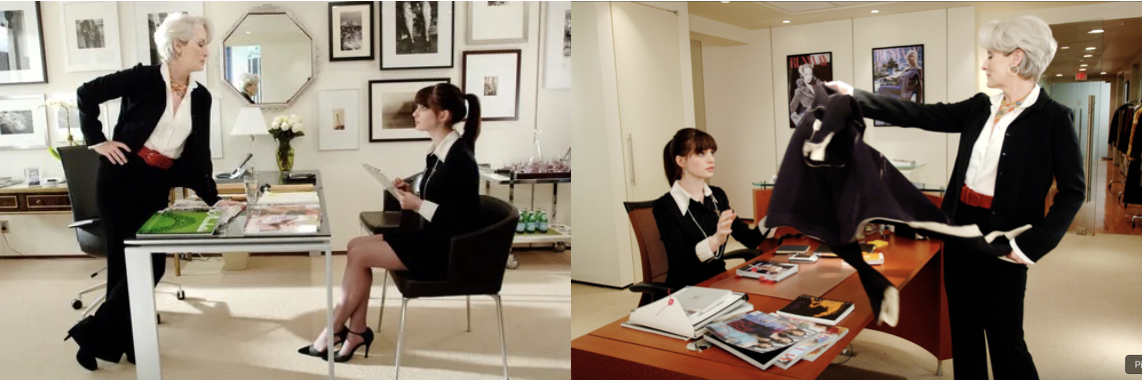
Fig. 6: The Devil Wears Prada (2006)
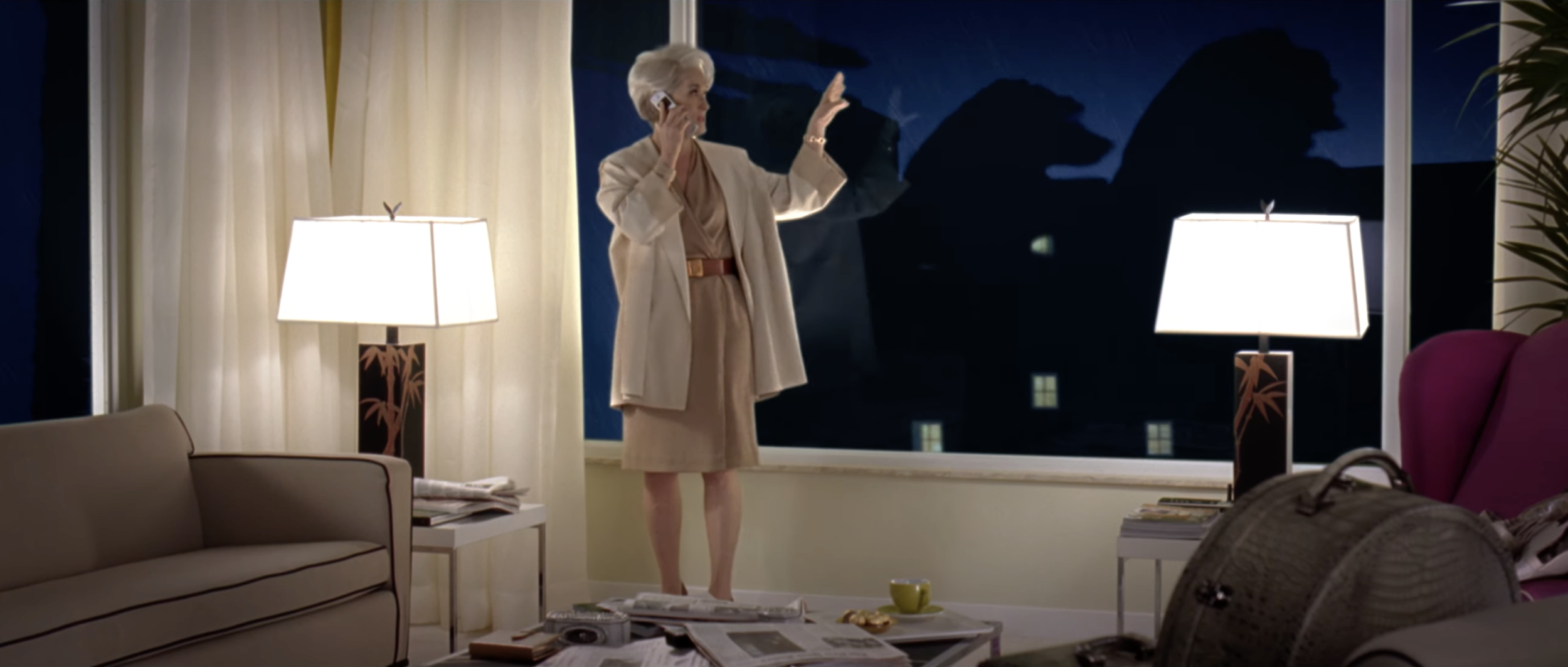
Fig. 7: The Devil Wears Prada (2006)
Miranda Priestly and Cruella de Vil are both aesthetically very different, yet they have striking similarities. Although they are both referred to as the devil, they are opposite sides of the same coin. They are both first introduced in the same way; stepping out of a cab wearing a fur coat, but they function in different ways. Cruella functions as a purely selfish and greedy Devil, causing evil and harm for her own vanity. She is highly visible, chaotic, emotional and her excessively evil actions are fuelled by her individual desires. Miranda on the other hand functions as an emotionally detached Devil that puts her work before her own needs, and her evilness is a consequence of her priorities. She is controlled, normalized, and institutionally evil.
Both of these devil-like characters are ambitious women who hold great power and have a strong vision, which raises concerns about if representing them as the Devil could also be rooted in misogyny. Both films present strong feminist themes as they are both independent women in power that have the ability to shape an entire industry. But why are they portrayed as unlikeable by design? As Cruella notes to Anita, “More good women have been lost to marriage than to war, famine, disease, and disaster. You have talent, darling. Don't squander it.” (Cruella in 101 Dalmatians) This line positions Cruella as a woman that does not believe in traditional values of gender. Even in The Devil Wears Prada, Miranda’s soon-to-be ex-husband is only a side character that is present for a few minutes in the film. These women have both replaced romance with power, and are denied softness and intimacy. If Miranda or Cruella were men, would they have been called evil? In Teresa de Lauretis’ Technologies of Gender, she argues that gender is not a natural trait but a social product created through various “technologies” like film and literature. She criticizes the traditional feminist focus on sexual difference, suggesting that viewing gender as a simple male-female binary limits our ability to understand the diverse experiences of women across different races and classes. In her text she describes the mechanisms of representation that frame certain women as “Evil Incarnate”. (9-10) De Lauretis distinguishes between “women” (the physical human beings) and “Woman” (a cultural representation). (2) Applying de Lauretis’ framework to Cruella and Miranda as the devil, they become the archetype of “Woman” of “Evil Incarnate”. De Lauretis follows Michel Foucault’s concept of the “technology of sex”, and argues that gender is a “set of effects produced in bodies, behaviors, and social relations” by a “complex political technology”. By representing these characters as the devil, the technology of gender assigns them a specific social location that is defined by their deviation from traditional feminine roles, which then places them in the category of the monstrous evil. (3) De Lauretis also mentions that the sex-gender system is a “symbolic system or system of meanings” (5) that correlates sex to cultural contents according to social values and hierarchies. Cruella and Miranda are both represented as asexual women as they are challenging traditional structures of power.
In The Devil Wears Prada and 101 Dalmatians, the figure of the devil is no longer confined to its traditional monstrous form, but instead emerges through complex identities. Through Cruella de Vil and Miranda Priestly, evil is reimagined as something that can be both highly visible and subtle. Cruella represents a theatrical and campy form of the devil that is driven by greed and spectacle. Miranda embodies a more restrained and institutionalized form of evil that operates through control and systemic power. Together they show that the devil is not a fixed entity, but an identity that one can embody. By drawing on Jung’s notion of the “shadow”, Miranda and Cruella can be understood as physical manifestations of their own internal devil. They both allow sinister sides of their unconscious to come to light. At the same time, de Lauretis reveals how systems of representation shape the way powerful women are perceived. Rather than portraying authority, these films present female power as something that is unnatural and morally corrupt, reinforcing the idea that women who exist outside of traditional roles are evil. Ultimately, Miranda and Cruella modernize the image of the devil. They are examples that show how the devil in pop culture exists even in the smallest comparisons. Whether their devil-ness is expressed through spectacle or dismissive comments, they reveal that misogyny is systemic and has many layers, and sometimes can be presented in unintentional ways.
Works Cited:
Dante Alighieri, Inferno, in The Divine Comedy, Italy, c. 1321, p379-383.
De Lauretis, Teresa. “The Technology of Gender.” Technologies of Gender: Essays on Theory, Film, and Fiction., Indiana University Press, 1987, pp. 1-11.
Frankel, David. The Devil Wears Prada. 20th Century Studios, 2006.
Herek, Steven. 101 Dalmatians. Walt Disney Studios Motion Pictures, 1996.
Jung, Carl G. “God, the Devil, and the Human Soul.” The Atlantic, May 27, 2022. https://www.theatlantic.com/magazine/archive/1957/11/god-the-devil-and-the-human-soul/642861/.
Mehrtens, Susan. “Jung on the Devil and the Reality of Evil.” Jungian Center for the Spiritual Sciences, October 12, 2023. https://jungiancenter.org/jung-devil-reality-evil/.
Russell, Jeffrey Burton. “Evil.” Essay. In The Prince of Darkness, 1–6. Ithaca, New York: Cornell University Press, 1988.
Stein, Murray. “Jung on Evil.” The Pari Center. https://paricenter.com/library-new/pari-perspectives/jung-on-evil/.
The Bible. New International Version, Bible Gateway, www.biblegateway.com.