Fashion through digital animation
In recent years, digital fashion has been rising in popularity. We’ve seen it through social media influencers like the computer-generated Lil Miquela, and augmented reality tools like Instagram and Snapchat filters that allow users to “wear” digital pieces. Animators and digital designers create virtual clothing that challenges traditional fashion boundaries, which opens up new doors and avenues for conversations, creativity and innovation. In my opinion, the film and fashion industries are linked, influencing one another to create trends that can sometimes turn into cultural phenomenons. Movies play an important role in shaping fashion, and vice-versa. A prime example is, although not animated, The Barbie Movie (2023), whose success allowed for a wider scope in its commodification, as it created collaborations with a large amount of fashion brands, from luxury fashion houses like Balmain, to more accessible brands like Aldo. As digital fashion is on the rise, collaborations like this one may pave the way for more innovation. Digital animation is in our everyday lives through our screens, blurring the lines between reality and the virtual world more than ever before.
The use of animation and CGI in the fashion industry is not a new concept, but has evolved significantly in recent years to become a powerful tool for design and marketing. In the height of the coronavirus pandemic, fashion houses had to come up with new innovative methods to showcase and commodify their products, and they did not have much options. Many fashion houses created live action fashion films, but some went to look outside of the box. This is where digital media and animation comes in as a useful resource, as it does not require a social environment. To exemplify let’s take a look at Balenciaga’s ready-to-wear fall 2021 collection. Demna Gvasalia, former creative director of Balenciaga, tells Vogue that he finds fashion films to be outdated. With the help of animators and hundreds of people, Balenciaga created a completely computer generated fashion show and campaign, featuring animated models and clothing, alongside a web video-game that consumers could play. Taking inspiration from a futuristic video game aesthetic, this collection also invites consumers to experience a game-like world when viewing the lookbook. Although the web video-game is no longer available to play, the same website now takes consumers to the lookbook of the collection that takes a “choose your fighter” form, where “players” can view each look in 360 degrees, offering an interactive and immersive experience while viewing this archive, as shown in Fig. 1.
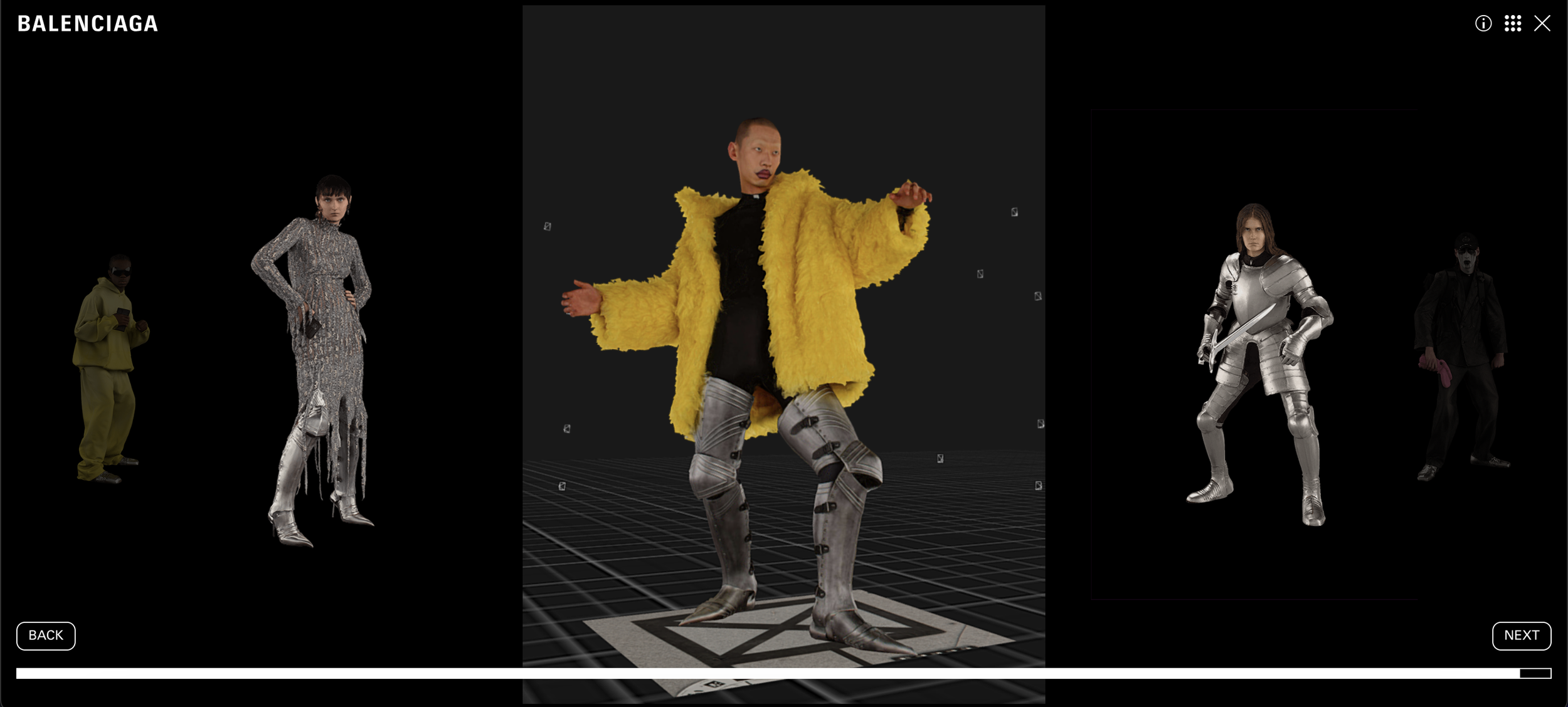
Fig. 1: Balenciaga Fall 2021 Collection.
In his essay, True Lies: Perceptual Realism, Digital Images, and Film Theory, Stephen Prince conceptualizes perceptual realism as the idea that digitally created imagery is convincing not because it perfectly mimics the physical world, but because it aligns with how we perceive reality, and this concept can be applied to Balenciaga’s computer generated collections. Though the models and environments are entirely computer generated images, the way that this clothing is being marketed through the immersion of the consumer creates a sense of realism that makes it believable. The fashion consumer recognizes this animated fashion show as real enough to engage with, encouraging them to then purchase the physical products that are being digitally showcased. People are able to play the game, but also buy (at a ridiculous price) and wear the clothes that are in the game. By utilizing perceptual realism and CGI, fashion houses like Balenciaga are redefining how fashion is experienced and consumed in a post-physical world, and this also can allow for consumers to justify the price tag. However, an issue that this raises is the misrepresentation animators face that Mihaela Mihailova talks about. In her essay, Collaboration without Representation: Labor Issues in Motion and Performance Capture, Mihailova critically investigates labour dynamics within the motion capture industry in Hollywood. She emphasizes the lack of recognition animators face, as the film industry often only recognizes the main actors as the primary creators of of the motion capture performance. The same issues appear to be happening in the fashion industry. The designers and animators are not explicitly credited for this work. In its promotional campaigns, the only credit goes to the fashion house as an entity, and to the creative director by association. Gvasalia reveals to Vogue that this game was made in collaboration with Unreal Engine with the help of a hundred people. The vagueness of this answer may perpetuate what Mihailova writes about, overshadowing the work of animators beyond the film industry.
Computer generated imagery and animation are not new concepts that are used in the fashion industry; they have been integral for almost as long as electronic computers have existed. In the 1960’s, drafting and design softwares were first introduced to the fashion industry, which helped to increase efficiency in design and production of garments. By 1980, Yves Saint Laurent normalized the use of computers in the fashion industry with their Peruvian-inspired knitwear collection, which was designed on an Apple II computer, and woven via a computer-controlled Jacquard loom. By 1995, Gucci designed all of their leather goods in CAD (Computer-Aided Design), and Jean Paul Gaultier released their iconic “Cyberdot” pieces, which were designed digitally, taking inspiration from Victor Vasarely’s art (Domoszlai-Lantner 23-24). Today, the use of digital media and animation in the fashion industry has become so common that as consumers, we encounter it on a day to day basis. For instance, in 2022, Balmain collaborated with Mattel and created three NFT Barbies dressed in Balmain couture that existed only in virtual space (Egri 85). Unlike Balenciaga’s virtual fashion shows, these Barbies were wearing digital clothing that could not be worn in the physical world, and bids for the auction were around $2,000 USD for each NFT Barbie. Their value was purely symbolic, what Pat Power might call a sensory-coded orientation. According to Power, expressive digital imagery does not rely on realism, but engages viewers through emotion and metaphor. Egri’s observation that “The nature of the commodity fetish in the Marxian sense persists but is radically transformed” (92) aligns with what Power’s framework emphasizes, as these digital objects are not meant to be worn, but they are meant to evoke desire and even status, much like expressive animation aims to evoke emotions by stylizing reality.
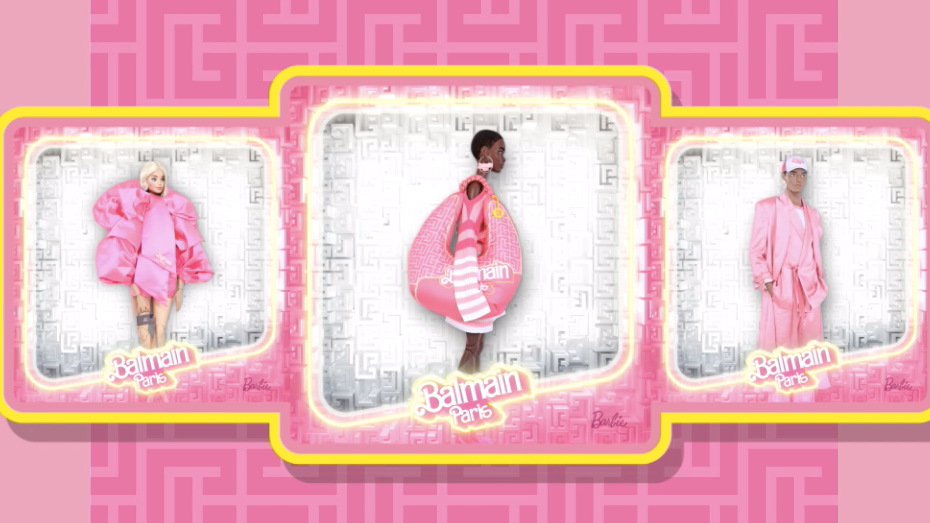
Fig. 2: Barbie X Balmain NFT (Via Forbes)
The fashion industry’s use of CGI and animation echos Powers call for a more liberated and artistically diverse approach to digital animation. Digital fashion in this case helps to also reshape how we understand beauty and emotional connections in virtual spaces. Michael R. Spicher claims that digital objects have value and importance, enough to for people to assault others in order to “possess” them (46). He explains that in 2007 in the Netherlands, two older boys physically attacked a younger boy to steal a magic amulet and an enchanted mask. But these objects are not physical, they only exist in a video game. If people can become so emotionally invested in virtual, non-physical items that they treat them as real, might the same emotional legitimacy be extended to digital garments and NFT fashion? Clothing has always served as a form of personal expression; what we wear reflects who we are. In this virtual age, it seems that what we “wear” or “own” digitally can carry just as much meaning as if it was real.
All of this raises the question: what does the future hold for digital fashion? The hype surrounding NFTs has died, and artificial intelligence is on the rise, bringing innovation but also uncertainty for artists and animators whose jobs could be threatened by its advancement. Animation, like fashion design is a labour-intensive process that requires time and skill. In Frame by Frame, Hannah Frank analyses cel animation to reveal the traces left behind from the labour that goes into creating celluloid animation. The evolution of digital fashion and Frank’s analysis reveal tensions between the advancement of technology and the visibility of creative labour. As mentioned earlier, Balenciaga’s Fall 2021 collection failed to properly credit the animators and artists who spent countless hours working on digitizing the collection. Frank dissects early productions of cel animation, focusing on the labour that goes into animating, the materials and the process behind producing animated sequences. “By viewing the film frame by frame, however, one can spot the traces of the hundreds of hands that touched Mickey before he made his way to the screen.” (Frank 2). She explains that cel animation frames often hold fingerprints, or strands of hair and fingerprints of the workers that reveals the countless anonymous animators who were uncredited from their work. This is a process that was not meant to be seen by viewers, what they are meant to see is Mickey Mouse as a finished product, and not as all the work that went into creating the world around him. Mickey Mouse is just an example that Frank uses, but not much seems to have changed. Through my research for this essay, I was not able to find the names of all the animators and designers who worked on the Balenciaga collection, or the Balmain X Barbie NFTs. What the viewers and consumers see is the finished product, we see a game we can play with clothes we can buy, or we see Barbie, a character that is beloved by people, dressed in couture. The credit for the creativity seems to land in the laps of Demna Gvasalia, or Olivier Rousteing the creative directors of Balenciaga and Balmain. This observation obviously is not to discredit the work of these designers, but just as Frank urges audiences to acknowledge the labour that it takes to produce a work of art, we must keep that in mind when consuming fashion digitally.
The use of animation in the fashion industry is not just a trend, but a new form of storytelling, and commodification. Fashion houses are able to revolutionize the industry with the use of this technology. From virtual animated garments to digital runways, animation has enabled designers to reach new audiences by pushing boundaries, but it ultimately raises ethical concerns around labour, and authenticity. Balenciaga has shown us that digital fashion can be a catalogue of what to shop for, Balmain has shown us that you can own these digital products and Jean Paul Gaultier has in a way taken an digital product out of the computer and turned it into static clothing with their “Cyberdots.” As the line between physical and digital fashion becomes blurred, the industry must remain both visionary but also responsible; celebrating innovation while not trying to erase the names of the artists that helped create a digital product.
Works Cited
Balenciaga. Afterworld: The Age of Tomorrow. https://videogame.balenciaga.com/en/.
Balenciaga. Fall 21 Collection. Balenciaga, https://www.balenciaga.com/en-us/fall-21?srsltid=AfmBOooJgipF7PoTr7XpoLX2v0JZ1L0SAptr83V0DlzxVw9SQw3H18dp.
Domoszlai-Lantner, Doris. “A History of Digital Fashion: Critical Theories and Turning Points.” Digital Fashion: Theory, Practice, Implications, edited by Amanda Parkes and Marina Toeters, Bloomsbury Publishing USA, 2024. ProQuest Ebook Central.
Egri, Petra. “Balmain x Barbie: A Fashion NFT Case Study.” Digital Fashion: Theory, Practice, Implications, edited by Amanda Parkes and Marina Toeters, Bloomsbury Publishing USA, 2024. ProQuest Ebook Central.
Frank, Hannah. “Introduction: Looking at Labor.” Frame by Frame: A Materialist Aesthetics of Animated Cartoons, University of California Press, 2019, pp. 1–13.
Gerwig, Greta, director. Barbie. Warner Bros. Pictures, 2023.
Hardcastle, Kate. “A Year After the Barbie Movie, Can the Dollhouse Keep the Lights On and Shining Bright?” Forbes, 7 July 2024, https://www.forbes.com/sites/katehardcastle/2024/07/07/a-year-after-the-barbie-movie-can-the-dollhouse-keep-the-lights-on--shining-bright/.
Klich, Tanya. “How Balmain and Barbie Are Defining the Future of NFTs for Fashion, Tech, and Toys.” Forbes, 12 Jan. 2022, https://www.forbes.com/sites/tanyaklich/2022/01/12/balmain-barbie-and-the-future-of-nfts-for-fashion-tech-and-toys/
Kotsoni, Elektra. “Is Digital Fashion Still in Fashion?” Vogue Business, 4 June 2024, https://www.voguebusiness.com/story/fashion/is-digital-fashion-still-in-fashion..
Mihailova, Mihaela. “Collaboration without Representation: Labor Issues in Motion and Performance Capture.” Animation: An Interdisciplinary Journal, vol. 11, no. 1, 2016, pp. 40–58.
Miquela (@lilmiquela). Instagram, https://www.instagram.com/lilmiquela/.
Phelps, Nicole. “Balenciaga Fall 2021 Ready-to-Wear Collection.” Vogue, 7 Mar. 2021, https://www.vogue.com/fashion-shows/fall-2021-ready-to-wear/balenciaga#review.
Power, Pat. “Animated Expressions: Expressive Style in 3D Computer Graphic Narrative Animation.” Animation: An Interdisciplinary Journal, vol. 4, no. 2, 2009, pp. 107–29.
Prince, Stephen. “True Lies: Perceptual Realism, Digital Images, and Film Theory.” Film Quarterly, vol. 49, no. 3, 1996, pp. 27–37.
Spicher, Michael R. “Existence, Aesthetics, and Meaning: A Philosophical Reflection.” Digital Fashion: Theory, Practice, Implications, edited by Amanda Parkes and Marina Toeters, Bloomsbury Publishing USA, 2024. ProQuest Ebook Central.