The aesthetic of the ugly and the beautiful in ‘the devil wears prada’
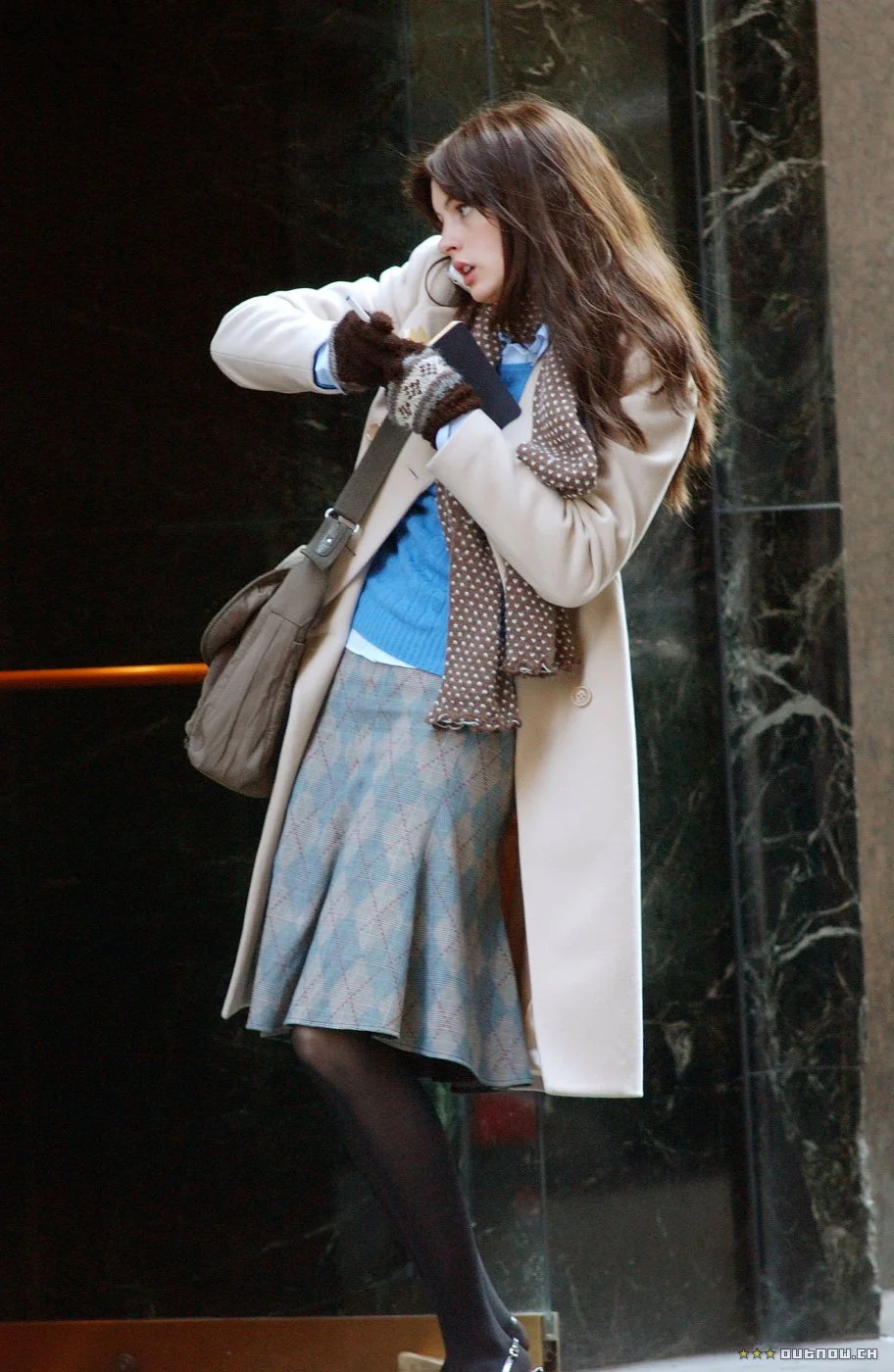
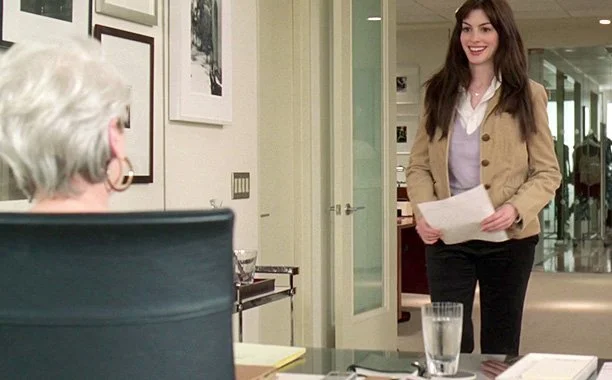
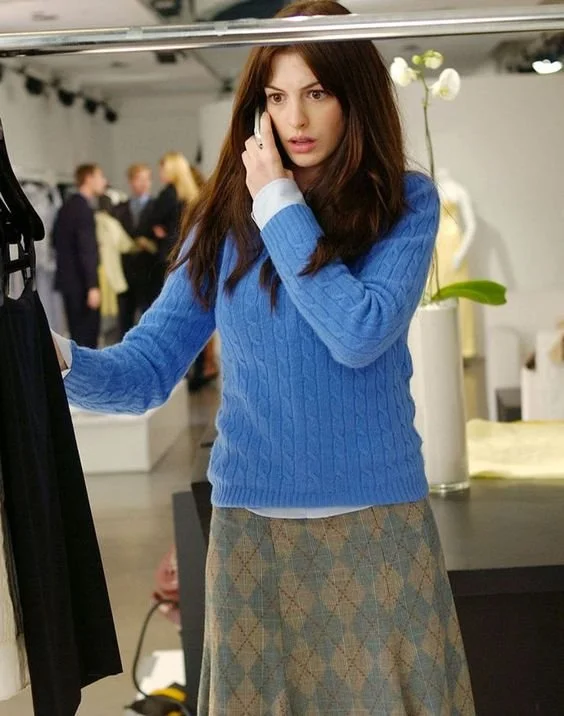
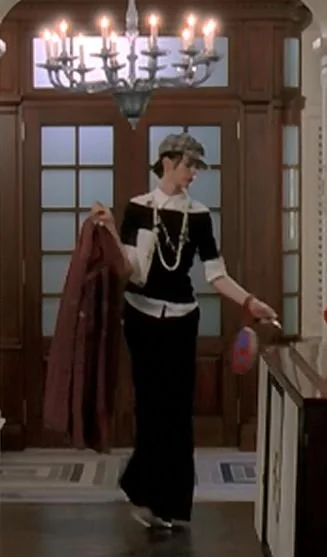
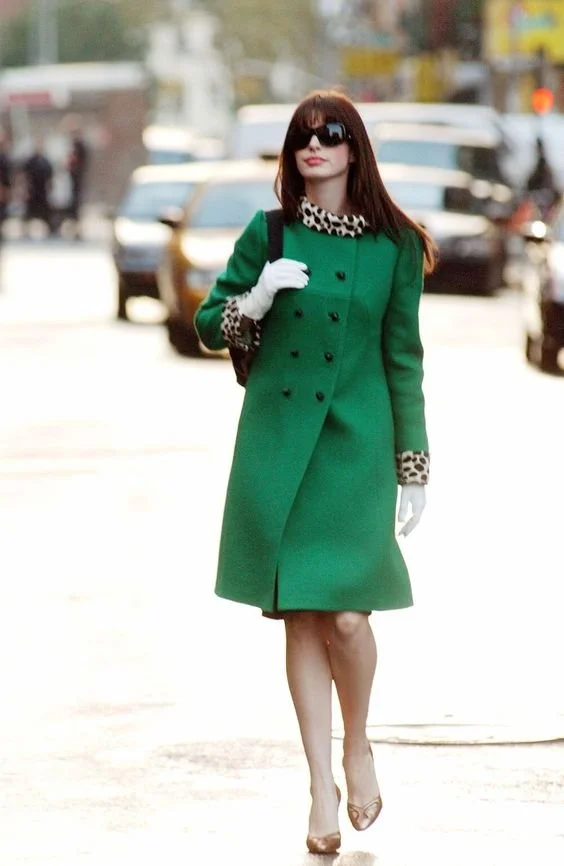
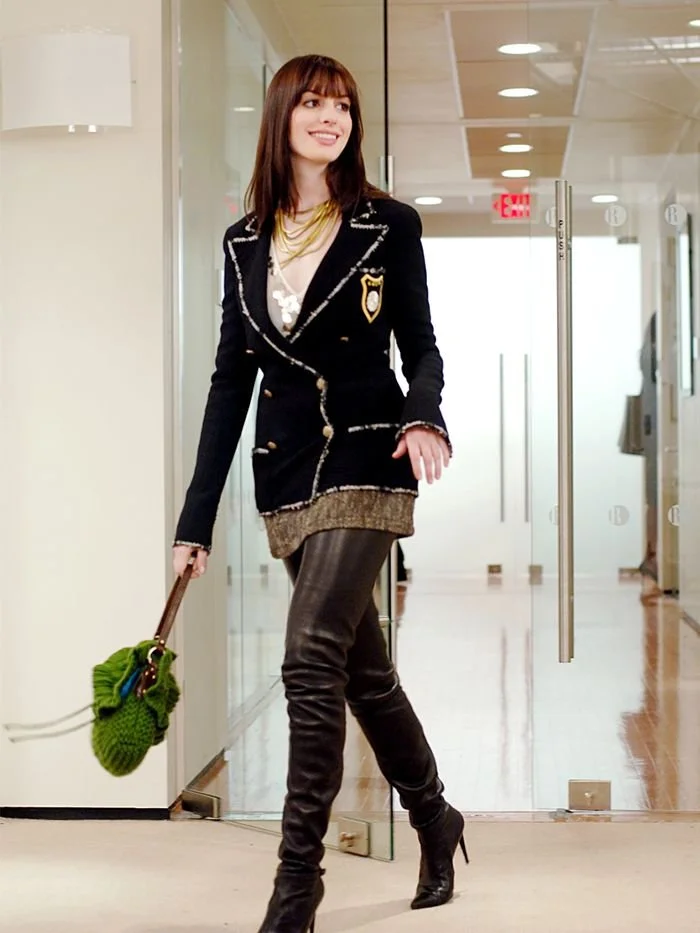
This essay will mainly focus on Andrea ‘Andy’ Sachs, played by Anne Hathaway, although her name did not matter to her boss, editor in chief at Runway Magazine, Miranda Priestly when she was ugly. Andy goes through big character development moments affected by her aesthetic choices. The change in aesthetic in this film can mainly be seen through the character of Andy. This happens through a change of wardrobe, which in consequence leads to a change of attitude and behaviour.
The Aesthetic of the Ugly
Andy’s embodiment of ugliness through her carelessness about fashion
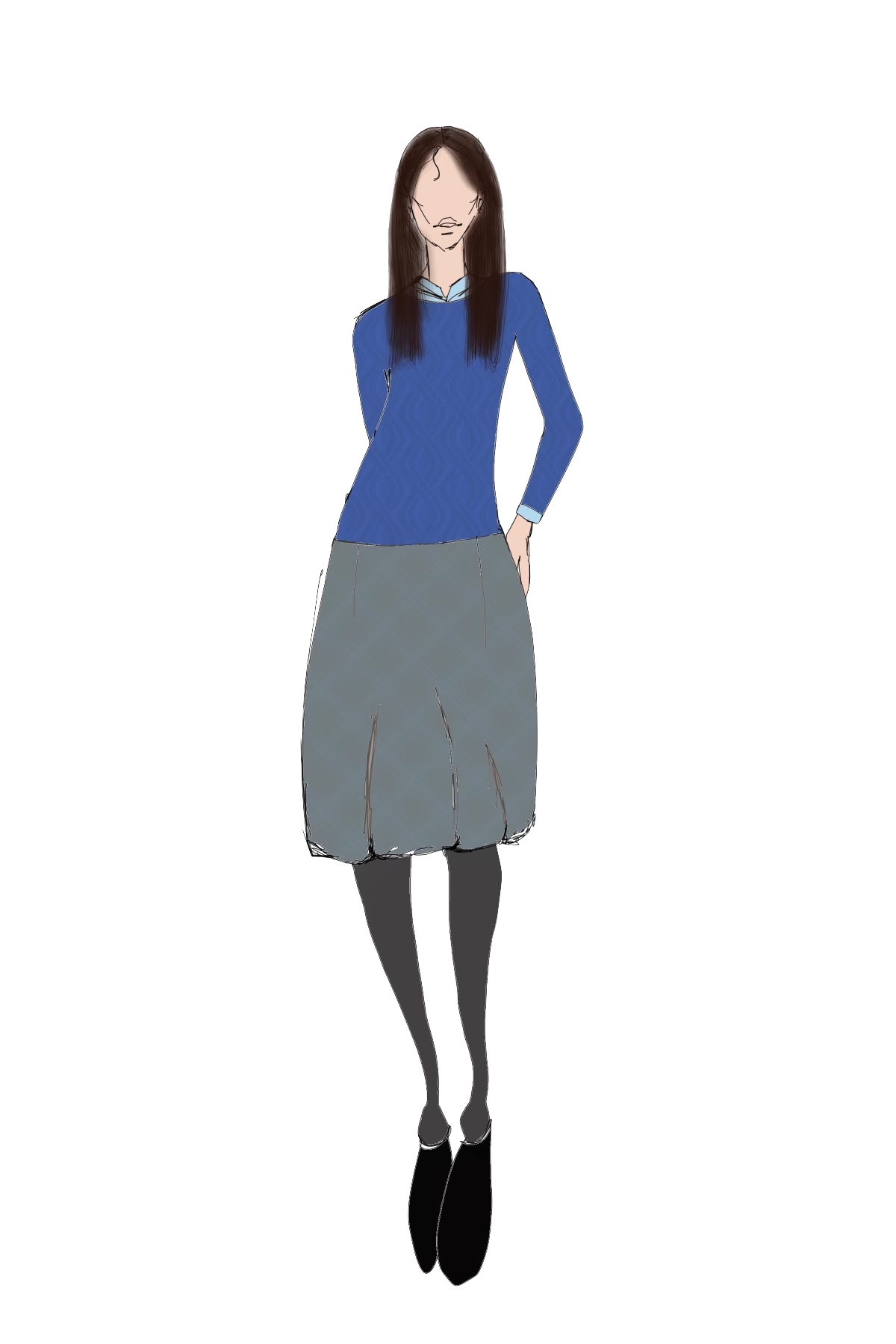
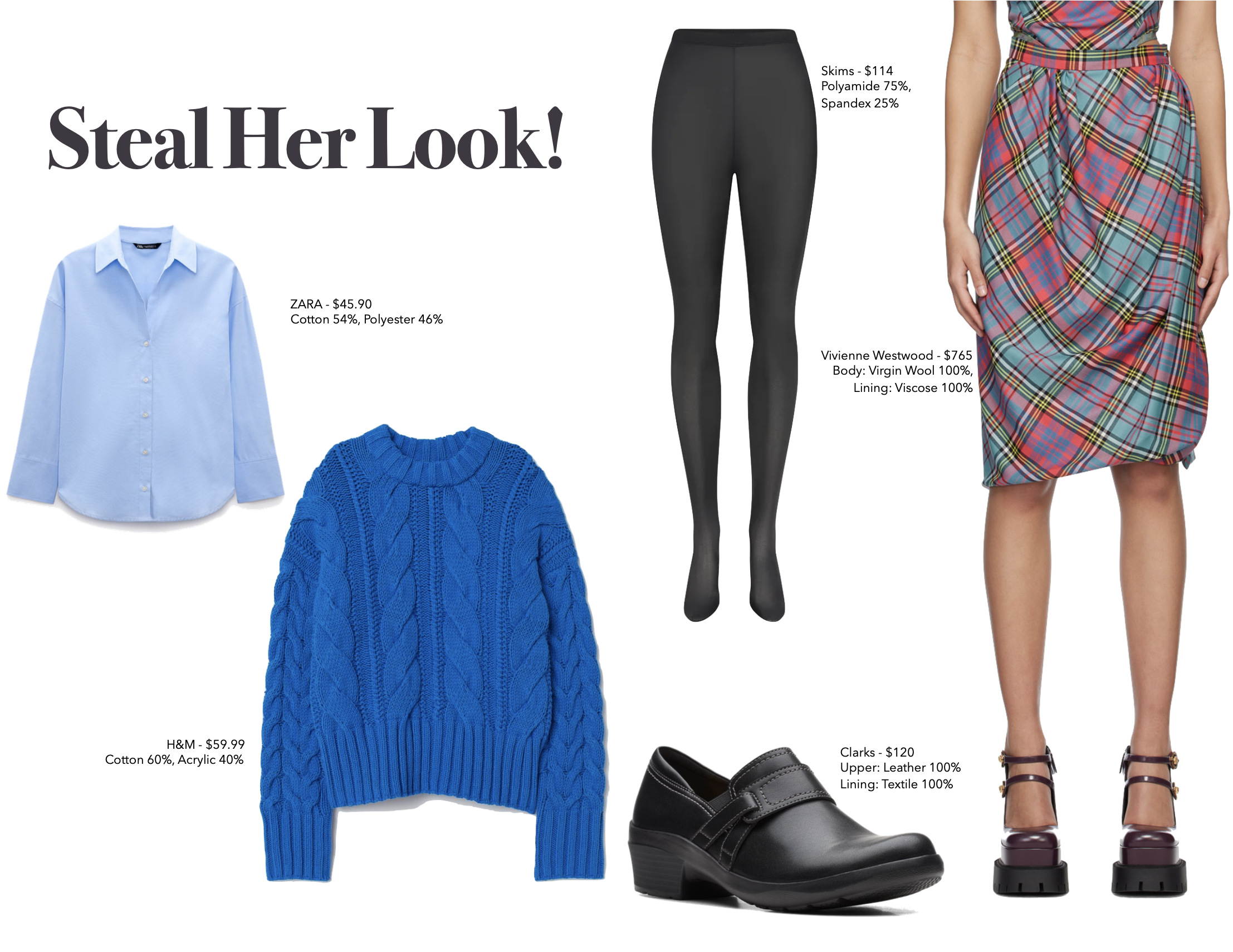
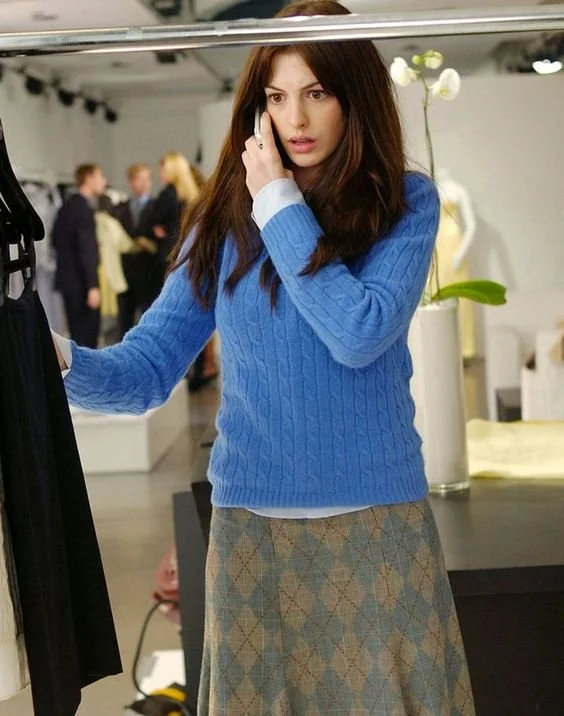
The standard in which ugliness is measured with is in conjunction with the standard that beauty is measured with. Beauty and ugliness are subjective and it depends on the context. At the beginning of the film, Andy’s wardrobe is very unfortunate, including awkward length skirts, ugly shoes and of course, the cerulean blue sweater. If we look at Andrea’s “ugly” outfits as an example and dissect them, each item of clothing is not necessarily ugly, but paired together they look hideous. For instance, same as the cerulean sweater, that plaid skirt also represents millions of dollars of countless jobs. Just like Andy is unaware of the Oscar de la Renta cerulean gowns (which are fake!!), she is likely unaware of the importance that Vivienne Westwood had on her outfit that day.
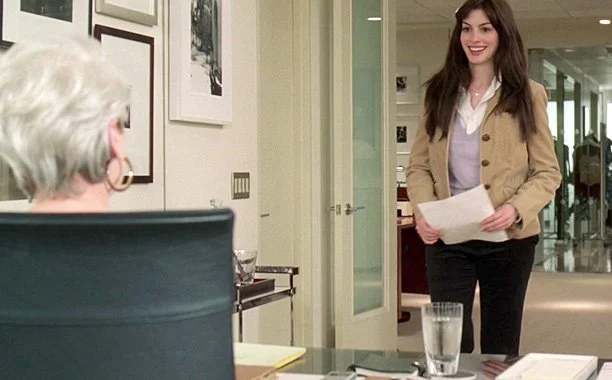
Andrea Sachs, is not completely unfortunate-looking. She has a very beautiful face, but she does not know how to properly dress. She is first seen in fuzzy colourful sweaters, random-looking layers and awkward length skirts.
The job as an assistant of editor in chief at a fashion magazine is not important to Andy because as she states at dinner with her friends, it is a job that pays the rent. This is the reality for many people, getting any job just to be able to survive this capitalistic society that we live in. Capitalism makes people conform and change character and aesthetics in order to fit certain scenarios, because in reality, freedom is a myth that we were made to believe that we have by the government. However, the capitalist ideology holds people hostage in a social prison in which we all have to conform to for our own survival. In the case of Andy Sachs, the change of aesthetic is due to the pursuit of survival, and not based on personal taste.
“Nobody lives in an aesthetic utopia; instead, negative aesthetic experiences are unfortunately prevalent in people’s lives, ranging from crass advertisements, environmental eyesores, and the foul smell of a landfill, to mind-numbing Muzak, cluttered billboards, and weed-infested abandoned lots.”
(Yuriko Saito, 435)
The Aesthetic of the Beautiful
The concept of beauty and the aesthetic of the 'beautiful' is subjective and can vary greatly depending on culture, personal preferences, and individual experiences. Something that may be considered beautiful to so many people, may not be important or special to others, like a diamond for example. Many people can argue that diamonds are beautiful because of their shine and strength, but that same stone may not have any significant meaning to everybody, and many can argue that it is just as boring as any other stone. The aesthetic of the 'beautiful' is a personal and cultural construct that is shaped by a variety of factors. It is up to each individual to determine what they find beautiful and to appreciate the beauty in the world around them.

“That’s really what this billion-dollar industry is all about, anyway, isn’t it? Inner beauty.”
(Nigel, The Devil Wears Prada, 2006)
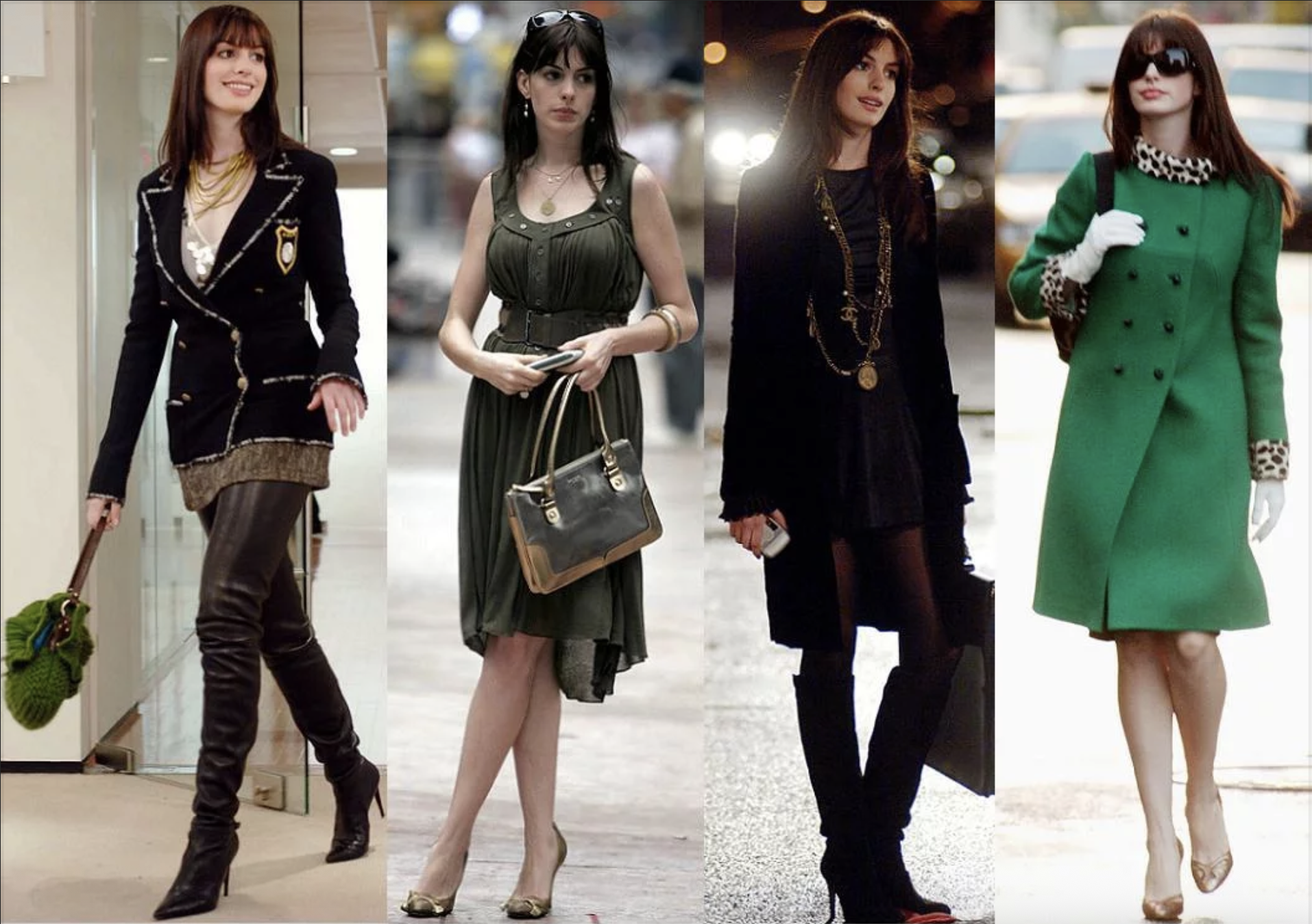
Andy's character in The Devil Wears Prada is representative of the cultural standard of beauty and fashion. Andrea becomes ‘beautiful’ once she starts dressing in expensive designer clothing. She is quick to adapt to an environment that has pressured her to change her entire look. Although there is no drastic change to her everyday makeup, and her haircut remains the same throughout the entire film, we start to perceive her as more beautiful because of her fashionable outfits. The standards in which beauty is measured with is very surface-level.
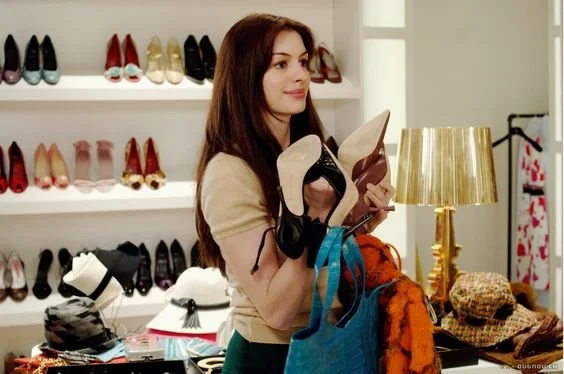
Rosalind Galt explains that “To be beautiful is to be good, whereas to be pretty is simply to look good.” (Galt 52). Andy is a character that truly is beautiful on the inside. She tries her best to see the good in people and nowhere in the film was she ever truly evil to anybody. Inner beauty definitely is important, but ever since the day Nigel gave her new shoes and took her corn chowder away, Andy has gradually put in the work to become pretty on the outside. The change in her style highlights the power of fashion and beauty to shape the perception of ourselves and the world around us.
The Psychological
Effect of Aesthetics.
Andy’s behaviour changes throughout the film, as she transforms her aesthetic to fit the social norm of ‘beauty’. This can be explained through the theory of Enclothed Cognition. This theory explores how a person’s attitude and actions can change based on the way they are dressed. A research experiment from Northwestern University, proves the theory of enclothed cognition. Fifty eight undergraduate students were collected and were randomly selected to wear a lab coat or to not wear a lab coat. They found that the people who wore a lab coat had a more increased attention than the people who did not. This whole theory can prove that aesthetics have a direct effect on our psychology. However, it does not take a big research to notice that the way we dress can affect the way we act. Picture yourself working at a fashion magazine, or you’re attending a fashion event. What are you wearing? Now imagine you wore this outfit to run day-to- day errands like going to the grocery store, or picking up your meds. Wouldn’t you feel like a different person if you bought lettuce while wearing a pair of Jimmy Choo’s?
Andy is a perfect example of how this theory applies to people. When she first lands the job as an assistant to editor-in-chief Miranda Priestly at Runway Magazine, she does not look like she fits the role. The opening scene is quite interesting to analyze. We are shown different girls getting ready in the morning, making sure they all look pretty. It goes from different close-up shots showing make up, shoes and clothing, while ” Suddenly I See” by KT Tunstall plays and we can clearly hear “she’s a beautiful girl, she’s a beautiful girl”. Right away this gives us a sense of what the aesthetic of this film is. Once Andy steps into her expensive clothing, we can see a change in her own behaviour and an increased level of respect from people around her at work.
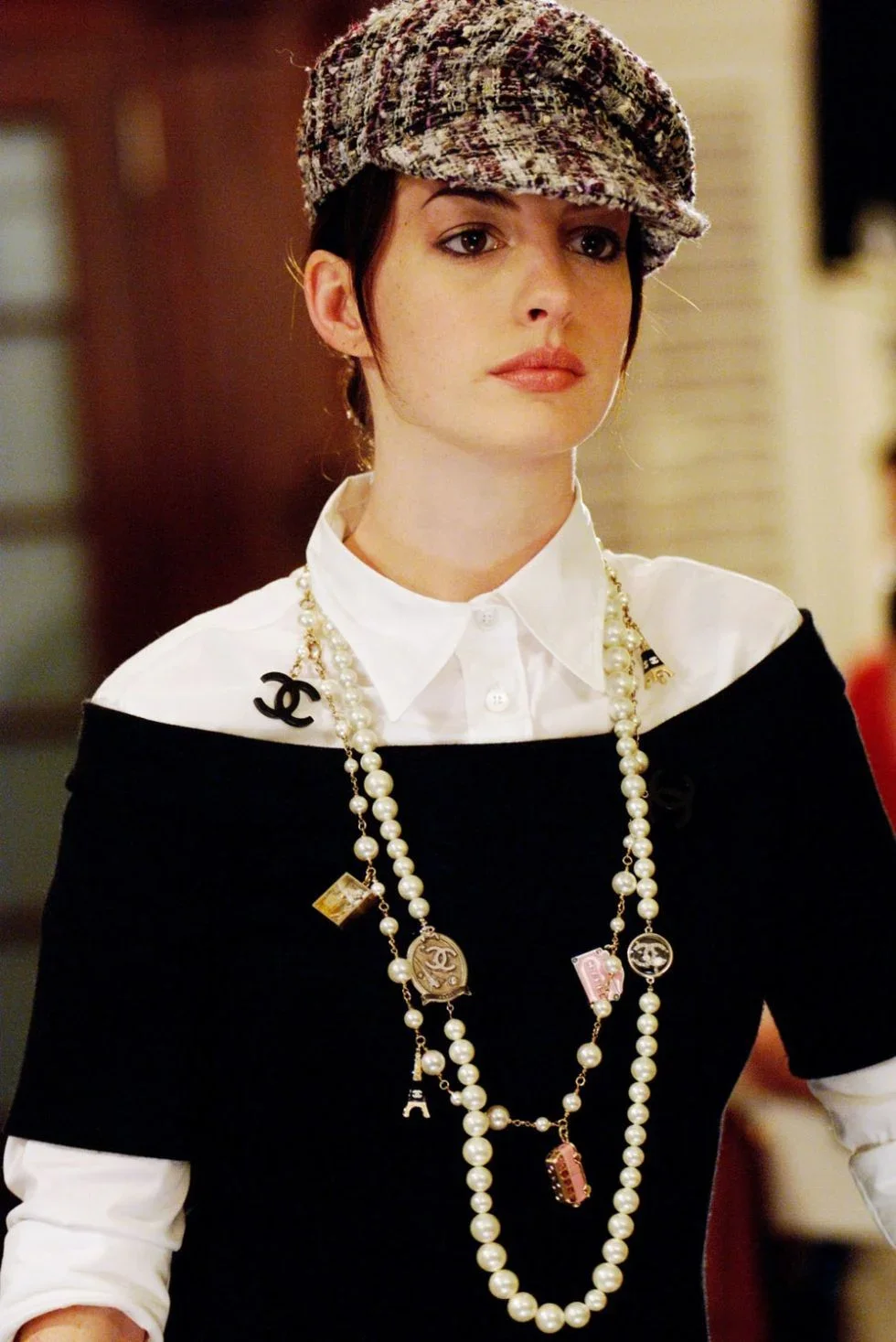
In Yuriko Saito’s Everyday Aesthetics, she writes “The manner in which one conducts oneself is an aesthetic matter, insofar as it consist of the tone of voice facial expression and the bodily movement.” This aesthetic matter is however directly affected by the way one is dressed, which can be connected to the theory of enclothed cognition.
Works Cited
Adam, Hajo, and Adam D. Galinsky. “Enclothed Cognition.” Journal of Experimental Social Psychology, vol. 48, no. 4, 2012, pp. 918–925., https://doi.org/10.1016/ j.jesp.2012.02.008.
“Angie Poppy.” Clarks Canada Official Site, https://www.clarkscanada.com/products/angie-poppypos=2&sid=bcd38d60a&_ss=r.
“Cable-Knit Sweater - Cornflower Blue - Ladies: H&M Ca.” H&M, https://www2.hm.com/en_ca/productpage.0710401001.html.
Conde-Nast. “Oscar De La Renta Spring 2002 Ready-to-Wear Collection.” Vogue, Vogue, 17 Sept. 2001, https://www.vogue.com/fashion-shows/spring-2002-ready-to-wear/oscar-de-la-renta.
Frankel, David. The Devil Wears Prada. 20th Century Studios, 2006.
Galt, Rosalind. 2011. “Chapter 1: From Aesthetics to Film Aesthetics, Or Beauty and Truth Redux.” In Pretty: Film and the Decorative Image by Rosalind Galt, 38–74. New York: Columbia UP.
“Glissenette Footed Legging.” SKIMS, https://skims.com/products/
glissenette-footed-legging-onyxvariant=41184697876612&gclid=CjwKCAjw__ihBhADEiwAXEazJju2UuF3WMA9sheUReY__Mq8Vf2BoCj5cV2RgXW_YeZfcBlqyLYUBoCSXUQAvD_BwE.
Saito, Yuriko. 2018. “Everyday Aesthetics.” In Aesthetics: AReader in Philosophy of the Arts, edited by David Goldblatt et al., 4th ed., 434–437. New York and London: Routledge.
Ssense. “Vivienne Westwood - Multicolor Drunken Drape MIDI SKIRT.” Ssense, https://www.ssense.com/en-ca/women/product/vivienne-westwood/multicolor-drunken-drape-midi-skirt/11711251gclid=CjwKCAjw__ihBhADEiwAXEazJg0Kx6mJKKeAOjDpK-FUydXuhkMiOveutqPJ8y1jYmKK0m8h2Z0TPxoCGLEQAvD_BwE.
Tunstall, KT. “Suddenly I See.” Eye to the Telescope, Universal Music Operations Limited, 2006.
Zara.com. “Oxford Shirt.” ZARA, 19 Apr. 2023, https://www.zara.com/ca/en/oxford-shirt-p08372060.htmlv1=229466102&gclid=CjwKCAjw__ihBhADEiwAXEazJhFOVxaWLKh44mwmvKZN3LWKSJ0zKnWnZ6b6jVl8Bktz_F6nRFTYQxoCTLoQAvD_BwE.